Flat Feet in Adults: When Are They a Problem?

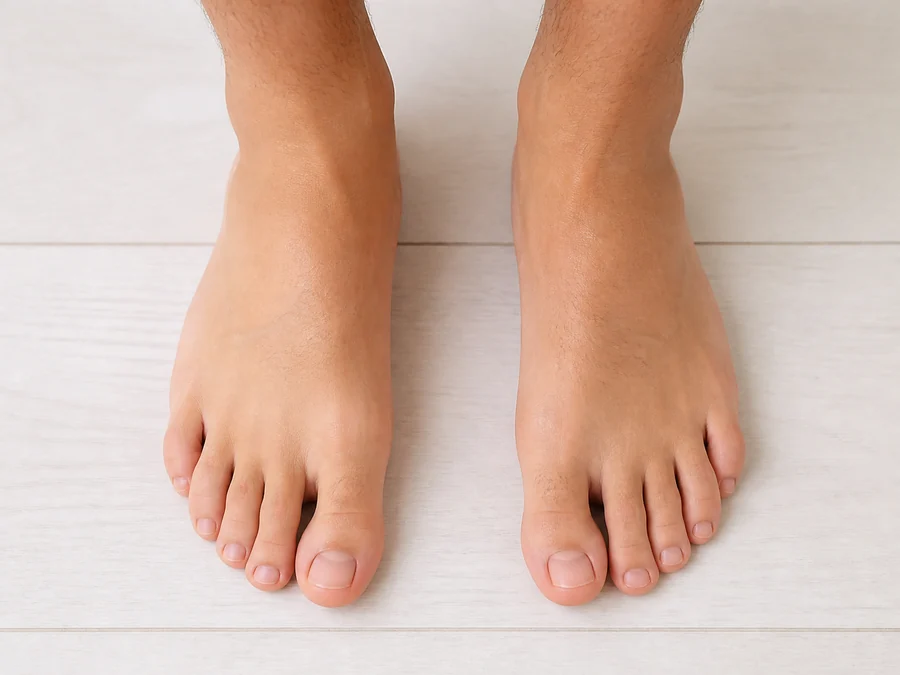
A flat foot has a low or absent visible arch when standing. For many adults this is simply their normal foot shape and causes no difficulty. The shape alone does not decide whether treatment is needed. Symptoms, change over time and the effect on walking or activity matter more.
Signs that deserve attention
- New pain or swelling around the inside of the foot or ankle.
- A noticeable change in one arch compared with the other.
- Increasing fatigue or discomfort during walking.
- Difficulty rising onto the toes on one side.
- Pain that limits work, exercise or daily activity.
An arch that has gradually changed in adulthood can have a different context from flexible flat feet present since childhood. A clinician can assess movement, strength, footwear and whether further investigation is appropriate.
What an assessment may include
You may be asked when symptoms began, what activities aggravate them and whether the shape has changed. The examination may look at standing alignment, ankle and foot movement, muscle and tendon function, walking pattern and footwear. Support options are considered according to findings rather than arch appearance alone.
Helpful everyday considerations
Wear shoes that fit securely and suit the activity. Increase new walking or exercise loads gradually. If a movement or exercise increases pain, pause and seek individual guidance instead of pushing through it.
General educational information only. It does not diagnose the cause of a changing arch. Source: Royal Orthopaedic Hospital guidance.